It's a Dog's Life

It's a Dog's Life
Furry Four-legged Fun

Family Felines

Family Felines
Cats Rule and Dogs Drool

Won't You Be My Neigh-Bor?

Won't You Be My Neigh-Bor?
Ride 'Em Cowgirl(boy)

Birds of a Feather

Birds of a Feather
Flights of Fancy

Caring for Long Haired Cats

Friday, December 10, 2010

Long haired breeds of cats such as Maine Coons, Persians and Ragdolls need a little extra TLC from their owners than other short haired breeds. In the natural world it is unlikely that cats with coats too long for them to maintain themselves would have survived, however selective breeding of domestic cats over hundreds of years has allowed many breeds to develop long, flowing coats that require some human help to keep in tip top condition.

Brushing a Long Haired Cat by Jon Ross
Long haired cats should be groomed daily to keep their coats free from knots, matting and a build up of dead hair. This is a simple and quick process if done regularly before knots can build up, and you should be able to pass a brush through your cat's coat easily without causing any stress to your cat. You will need a high quality grooming kit which should consist of several brushes and combs for different purposes.

  • Long Toothed Comb - for general grooming. Work the comb from tip to root to untangle the hair.
  • Narrow Toothed Comb - for teasing out knots, or removing fleas.
  • Trimming Scissors - you may need scissors to remove stubborn knots or matting. To do this safely, place a comb underneath the knot to protect your cat's skin and cut out the knot. Trimming scissors can also be used to remove excess hair from around your cat's anus if it is interfering with their toilet habits.
  • Wire, Rubber or Bristle Brush - for removing dead hair and generally conditioning the coat. You should use this brush or the long toothed comb most often for grooming.
  • Soft Cloth - used damp to clean your cat's face, especially around the eye area.

There are also many other types of specialist grooming tools available, such as shedding blades, clippers and even hand held grooming vacuums that gently suck away dead hair and dander (dead skin). Different cats will tolerate or even enjoy different grooming tools, so you may have to experiment to find a method and routine that your cat is happy with.

You should start grooming your cat from as early as possible, to get them used to the tools and actions. If your cat really hates being brushed, try out a special grooming glove which can tease out dead hair simply while you stroke.

Some pet owners choose to keep long haired cats indoors, to prevent their hair from getting excessively dirty or knotted while outside. If your cat does get into a bit of a mess, give them a bath using a special cat shampoo, taking care to avoid getting soapy water in their ears, eyes, mouth or nose. After bathing, towel dry your cat to remove all excess water and then blow dry with a hairdryer set on a low heat.

Kitty's First Bath by Maggie Osterberg
Grooming your cat regularly isn't needed just to keep your cat looking great - it is also important for their health. Like all cats, long haired breeds spend a lot of time grooming themselves, however ingesting a large amount of hair can cause excessive hairballs and blockages in their digestive tract. Matted fur can also cause a great deal of discomfort to your cat, since the hair is pulled tighter as the knot worsens. Severe matting can result in skin irritation or even infection if not treated.

If you are grooming your cat at least twice a week it should take no more than a few minutes to restore your cat's coat to a silky soft sheen, which is highly preferably to wrestling with knots or tangles on a cat that hasn't been brushed in days or weeks. Take the time to groom your cat regularly to prevent serious problems building up.

Not only is spending time grooming your cat the responsible thing to do, but it can also be a great way to bond with your cat.

All cats needs a nutritious and balanced diet to keep them healthy, and good coat condition starts from the inside. There are some specialty cat foods available for long haired cats. These foods are high in the nutrients needed to keep your cat's coat looking healthy and shiny, as well as for aiding in the elimination of hairballs.

Shower your long haired cat with a little extra grooming attention and they will thank you for it by leaving less shed hair around your home, and letting you run your hands over their silky soft fur.

Author Resource:
Tom Woodcock is a cat Lover and regularly helps out a local rescue centers. To learn more about Cat Supplies Cat accessories and pet Cats visit him online.

Article Source: ArticleSnatch Free Article Directory

Tips to Find Out Lameness in a Horse

Thursday, December 9, 2010

Pet animals like dogs express the pain or discomfort they suffer during illness or when they are hurt by whining or whimpering. But prey animals like horses do not do so because in the wild if they exhibit their lameness or weakness, they would be easy targets for predators. The horses on their part express their lameness in their movement. How to find out whether the horse is lame?

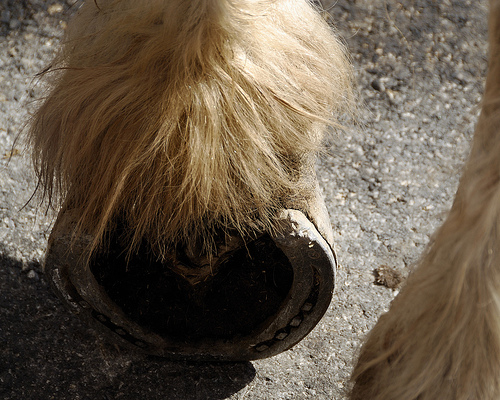
Horse Hoof by haglundc
Normally, the lameness of horses can be found out by observing their movement; movement of their legs and movement of their head. For example, the movement of the horse becomes uneven because the horse puts weight on one foot. The next indicator is the movement of the head. The head touches the ground or the horse keeps its head up depending on which leg he has hurt. In resting position, the horse will take the weight with the toe touching the ground. The veterinarians suggest that a lame horse should not be used for riding and immediate medical attention should be provided for such horses.

Identify the problem:
The first step in identifying the problem is examining the feet. A stone or some other objects could have wedged in the crevices of the horse. The hoofs might have been trimmed too short or the nail could be hurting sensitive skin around the foot. If the horse is hot, then feel the pulse at the fetlock area and find out if it is pounding. If the pounding is fast, then it is an indication that the horse is suffering from an injury. The lameness could be due to injury to the ligament in the lower leg or due to a worn out joint. This could be due to overwork when the horse was young. The other cause for lameness is injury on the back caused due to saddling apparatus.

According to veterinarians, horses normally suffer from certain diseases like Founder or Laminitis which affect the foot and cause severe pain. These diseases are caused due to overeating. The other common disease among horses is the Navicular disease which is caused due to degeneration of Navicular bones. In this condition, the horse may even stumble. He will stand with stretched feet. Azoturia is a serious disease affecting the horses. In this condition, the movement becomes stiff. This requires immediate medical attention.

Veterinarians suggest that a horse which is not working should be fed with oats. Further, before it starts work, there should be a gradual warming up and after work, it should be cooled gradually.

Author Resource:
Written by Rod Hoss
Animal Health Science offers excellent products for hoof care and other horse health products.

Article From Pet Article World

Raising a Reptile As A Pet

Wednesday, December 8, 2010

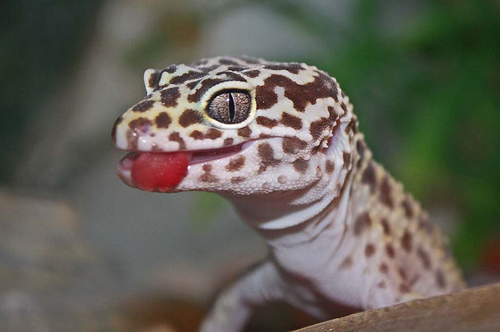
You may have admired the unusual looking lizards at your local wildlife center, or perhaps a neighbor may have an iguana in their back room. If you have not raised a reptile before, let me suggest that you start with a leopard gecko. The leopard gecko has two very big advantages, and one of them is that it does not get very big. The other major advantage of a leopard gecko is that is has been kept and bred in captivity since the 1920s, and is among the healthiest lizards and easiest to keep.

Lucky the Leopard Gecko by Casey Myers
A juvenile gecko is quite active, but as they mature they become rather quiet and tame, and can be held and will take food from your fingers. The adult gecko does not get larger than nine or ten inches, and can be handled by older children. Even younger children can hold them, but make sure they are supervised to handle the gecko gently and to avoid picking them up by the tail, or holding the tail tightly. As with other lizards in the reptile family, their tails can break off. Actually, this might be an interesting occurrence for children, as the tail will be regrown, though it never looks exactly the same as the original tail.

Leopard geckos are easily kept in an aquarium or other plastic cage, as long as each gecko has at least ten inches square of floor space. The cage should be a minimum of twelve inches high. Have a shallow bowl for water that doesn't spill as the lizards crawl into or over it. The food bowl for the gecko can be something about the size and shape of the lid for a gallon jar, a larger flat area. You will be using crickets or other insects as food, and it is better if the food remains in the food bowl. The bottom of the cage should have some kind of paper toweling so that it can be changed in order to keep the cage clean.

One really important point about raising reptiles is to keep the area sufficiently warm. Geckos thrive best when the daytime temperature is in the eighties, up to eighty-eight degrees. Nighttime temperatures can get to the middle sixties without causing any health problems. If your house is normally cooler than that, a lamp with a forty-watt bulb over the top of the cage should create enough heat to keep the gecko warm. There are also hot rocks that you can buy and put in the cage. Keep the cage out of direct sunlight (because it will get too warm) and have a screen cover for the top if you have small children or cats in your household.

Once you have the environment, go to a reputable pet store and select your geckos. Leopard geckos come in a variety of colors, and you can keep several in the same cage as long as there is only one male in the group (most geckos that are sold are female). They eat mealworms and crickets, and correct care and feeding should be discussed at length with the seller. A well taken care of gecko can live as long as twenty years.

Raising a reptile can be a fascinating hobby whether you are eight or fifty-eighty years old. Leopard geckos are among the easiest to raise, are easily tamed, and are always beautiful and interesting pets. Consider a gecko for your next pet.

Author Resource:
Tristan Andrews is a freelance author who writes about pet supplies and reptile cage supplies.

Guinea Pigs Are Great Pets For Children

Tuesday, December 7, 2010

It is good for a child to have pets. Rodents like hamsters and guinea pigs are usually the choices for a first pet. Before you decide to let your children have them as pets, you have to know how to care for them. You might want to know if guinea pigs are great pets for young children.

Sophie with a Guinea Pig by Ian Turk
They are very gentle and social animals and they seldom scratch or bite. You have to buy a pair so that your pets will not be lonely or suffer from depression. Parents should help the children care for the guinea pigs though, as they cannot care for their pets alone.

Keep them in a cage or hutch made from wire or other sturdy material. The cage can be taken indoors and placed inside the children's bedroom at night. Be sure to take them out during the day so that they can breathe fresh air. They also need to be groomed and fed. Always remind the children to feed their pets.

Guinea pigs eat dry grass and vegetables. These are their main diet. They should also be provided with fresh, clean water. During feeding time, you need to be there to guide the children in how to do it because they might have difficulties in carrying out the chore. Having a pet is a great responsibility and children need to share it with an adult.

Guinea pigs don't have the health problems that rabbits do. You just have to make their cages clean and change the bedding regularly as the guinea pigs will urinate and discharge of their waste inside the cage. To make sure that they are always healthy, clean the hutch at least once a week.

They can be kept in the child's bedroom as they are not nocturnal like hamsters so they will not keep your child awake at night. There are many types or breeds of guinea pigs, a short haired breed will make a better pet than a long haired one as they don't need much attention. Guinea pigs will make great pets for the children.

Author Resource:
Written by Danny Leighland
To save time, you can find a selection of pre-fabricated guinea pig hutches and cages that will not only save you money but time. Visit GuineaPigHutch.com.au to find the right guinea pig hutch for your pet.

Article Source: ArticleSnatch Free Article Directory
Puggles: A Popular Designer Dog Breed

Monday, December 6, 2010

Puggle sounds like the name of a toy or game because of the odd silliness of word's sound. Despite the fact that this is not the case, still the name is odd enough sounding that many would not know what Puggles were till they looked them up. Puggles are the end result of breeding a Pug with a Beagle. Who thought of this mixture? Who thought that mixing those two dogs would be a good idea? One man can take full credit for the creation of Puggles right down to the name.

Puggle Puppy by Fotos by Dee
Wallace Haven is the man that can take proud credit for Puggles and their current popularity among many people. Despite the fact that they are so popular, they are still not recognized by any of the Kennel associations. So owners of Puggles and Puggle breeders will have to resign themselves to having to show off their prized pets in private local shows. Puggles make a great family pet with Puggle breeders saying as much when asked. Puggles are a relatively new breed having only been commercially bred on a large scale at the beginning of the year 2000 by the first of the Puggle breeders, their creator Wallace Haven.

Being a relatively active dog Puggles do require a bit of exercise though not much, so they would be well suited for apartment life. Their size and relative heartiness makes them a fine pet for a family. Though they are of a mix breed that has the habit of being born with the same defects as their parents, Puggle breeders take the time with careful parent choice to ensure for the healthiest puppies possible. Seeing as they are not a registered breed of dog the going price that Puggle breeders ask for varies from puppy to puppy. This is because Puggle breeders charge based on the blood lines of the parent pair. The average listing price from Puggle breeders seems to be in the 500 dollar range going as high as 800 dollars in some cases.

Puggle breeders know that listing their puppies for a fair price improves the chances of them being bought. Puggle breeders know that Puggles pretty much sell themselves with their high intelligence, and the ease of maintenance. Though they may not be a breed that can be shown in all those fancy shows they are still a popular breed. People need to understand and realize that all of the current breeds that can be registered currently were once breeds that were not recognized. It will likely take time before the Puggle is a recognized breed. Soon we could see their wrinkled little faces trotting down the red carpet amongst the flashes of cameras and fellow Puggle enthusiasts.

About the Author
Written by Kathleen Chester
At Puppymatch4you you can find Puggles puppies for sale raised by some of the most reputed and ethical breeders across the US. Visit Puppymatch4you.com for more information.

Article Source: http://www.affsphere.com/Pets-and-Animals/Dogs-Origins-Breeds/Puggles-A-Popular-Designer-Dog-Breed-1.html

Your Red Tailed Black Cockatoo - A 7-Point Plan For Care

Sunday, December 5, 2010

The Red Tailed Black Cockatoo is stunningly beautiful and extremely intelligent. To insure a long, happy, and healthy life for this bird takes enormous dedication and love. Here is a 7-point care guide for owners.

Red Tailed Black Cockatoos Perching by LI Refugee
1. You may have bought your cockatoo a cage which looks as though it is quite impenetrable. However, be aware that your cockatoo's intelligence can be applied very easily to the mechanics of the cage door mechanism. These birds will easily take apart items, demonstrating an astonishing degree of dexterity as they do so. They seem to have almost as much dexterity in their feet as we do in our hands, and it is marvelous to watch. However, marvelous though it may be to watch your cockatoo delicately remove the pins and screws from the cage mechanism, it is not so endearing to watch your precious bird flying around the house, causing chaos, destruction and quite possibly injuring itself in the process. To this end, make sure that you provide your cockatoo with plenty to do, toys and activities to keep it entertained, and of course as much of your own time and attention as you can. This will keep your cockatoo engaged, stimulated, and happy. And a happy bird makes the best companion!

2. Are you fully aware that Red Tailed Black Cockatoos can live longer than you? Many people buy pets as relatively short-term commitments. Not that they want to, because most pet owners would gladly spend their whole lives with their animals. The majority of cockatoos' life spans rival that of the healthiest human. In many cases birds outlive their owners! Cockatoos can easily live between fifty and seventy years, and depending on how old you are when you buy your bird, you may well find that you have a companion for life. This is a huge commitment, and you will need to think carefully about the chances of any major life changes you have in mind, such as marrying, starting a family, moving away, career changes and such like. Make sure you don't find yourself committing to a cockatoo that then becomes an object of resentment in the future. It's also worth bearing in mind that you will usually need to make some provision for its care after you fall off your own perch for the final time.

3. Don't just feed your cockatoo seeds. Many owners believe that birds eat seeds or insects - period! Imagine if you were owned by a bird, and it fed you nothing but burgers and fries for half a century because they were the only foods they thought you would eat! Just like you, your cockatoo thrives on variety, and this applies just as much to the world of food as anything else. Use pellets, fruit, vegetables and even extras such as eggs, bread, and crackers. Choose people food carefully because it can range from bad for them to fatal in certain cases. Avocados, chocolate, caffeine products, alcohol are all fatal if ingested and should be avoided at all costs.

4. All birds need a good calcium-rich diet, but cockatoos require a much higher dosage. If you use a pellet based supplement then in most cases, if this is specifically targeted at the cockatoo family, it should already include a good calcium supplement. Be sure to provide your bird with high calcium foods. This mineral is an important part of keeping your bird in peak condition.

Red Tailed Black Cockatoo in Flight by davidfntau
5. Always make sure that your Cockatoo has a ready supply of clean water available at all times. However, water which may look perfectly clean and drinkable to us can contain toxins which are harmful to Cockatoos. In fact, cockatoos have a tendency to be much more seriously affected by these toxins than other birds or animals. A good tip is to use a water filter to purify the tap water before providing it to your bird. Even better is to provide bottled water if you can manage it.

6. Always keep an eye on your cockatoo's nails. Consult with your vet if you think they need a trim. Have your vet do it. But if this part of the care is something you want to take on, always have a professional show you how before attempting this yourself. Don't try it without having been shown first as you can very easily injure your cockatoo. Always provide rough landing areas such as sand or concrete to help keep the nails in check - similar to cats using a scratching post.

7. Make sure your cockatoo's air is the cleanest it can be. Using a high efficiency particle arresting (or HEPA) air purifier virtually eliminates dander, feathers, dust, and other particulates that can clog your bird's airways. And clear air passages mean a healthier bird and increased life span.

Giving careful and thoughtful attention to these 7 areas of care will have earned you the right to have your Cockatoo share your home and your life.

Author Resource
Written by Debbie Davis
Remove airborne pollutants from your cockatoo's air continuously with the air purifier from PurerAir.com at http://purerair.com/bird_dust_air_purifier.html

Article From Pet Article World

New To Fish Keeping: Checklist

Saturday, December 4, 2010

If you're new to fish keeping, there's probably a lot of information out there that's confusing you! As a result, I thought it might be quite handy to put together this checklist for anyone who is considering setting up an aquarium, to help you through the process and to try and achieve the best results you can. The most important thing you need to do is do your research! Make sure you investigate as much as possible, and look into potential pitfalls and how to avoid them. Keeping fish is not rocket science, it just requires some basic knowledge to make sure that your aquarium is looking great and your fish are healthy.

Fish Tank by hiroshiken
Research
Before you do anything, do some homework. Try and find out what is available and what might suit you the best. Your first step should be looking into different species of fish, and finding some that you feel you would like to keep. Once you've done this, you can then base everything around your choice of fish. That way, you know that your fish will have the best environment to live in, and you can enjoy them for much longer with fewer problems.

Size Up
Once you've decided what fish you'd like to keep, you'll need to think about the aquarium you'll be keeping them in. Obviously, you will probably now have a good idea of what size you'll need for your fish, but you now need to match this up with the size you have available in your home/work space. Fortunately, aquariums come in many different shapes and sizes so there should be an option out there that can suit both the needs of your fish, and the amount of space you have in your home.

Install
The installation of your aquarium should be done with plenty of time, and never be rushed. It's at this point that you'll need to make sure you have the correct equipment for the species of fish you want to keep. For example, do you need a heater or specialist filter? Also you should be thinking about things such as plant life and decor. Lighting can play a huge part in how good your aquarium looks, so try to make sure you get the best you possibly can...it'll be well worth it!

Test
The next thing to do is wait! Be patient as an aquarium takes time to settle. Your new fish will require a certain balance of bacteria within the water and this is something that takes around a week to achieve. Even then you can't be sure, so take a trip to your local aquarium store and buy yourself a testing kit. Testing the water to make sure it is ready for fish will make sure that you don't put your fish into water that may harm them. Testing kits are all relatively easy to use and if you're unsure, just seek the advice of the store owner.

Stock
The moment you've been waiting for has finally arrived, it's time to stock your new aquarium with fish! However, once again this should be a process that's not rushed. The worst thing you could do is go out and buy hundreds of fish in one go. Slow and steady is the key here, try starting off with around four fish per week and see how it goes.

Author Resource
Written by Kirsten Hendrich
For more information on aquariums and fish keeping, please feel free to visit Aquarium Group

Article From Pet Article World

Abyssinian Cats

Friday, December 3, 2010

The first Abyssinian cat known to have been brought out of its natural environment to be a domestic pet in the West was Zula, a female kitten taken from Alexandria to the UK in the 1860s by the British soldier Captain Barrett Leonard. He crossed Zula with a tabby, then bred her with the most Abyssinian looking of her own young to create the breed. By 1871 the breed was recognized and exhibited at the Crystal Palace in London.

Abyssinian Buddies by Cornelia
Although it is possible that other soldiers may also have brought home cats during the Abyssinian War, it is generally believed that all Abyssinians in Europe, North America and Australia are descended from Zula. The gene pool has been enriched a little in the USA with the import of one or two other Abyssinians from North Africa, where they can still be found living wild in some regions.

The 'Aby', as this breed is popularly known, is now one of the most popular shorthair pedigree breeds of cat in the USA.

Appearance
The Abyssinian is a medium sized, well shaped shorthaired cat with a princely appearance and a distinctively ticked coat. What this means is that each hair is striped with two different colors alternating in bands from root to tip. The effect is to give the coat a noticeable sparkle, especially when stroked.

The coat is usually a warm tawny color but there are blue and silver variants. The recognized color classifications vary from country to country, but in the US they include red, ruddy, fawn, cream, blue and lilac. To qualify for pedigree status the cat's body must have no tabby markings, although there are usually some on the tail and paws.

Abys have large ears and big almond-shaped eyes. The eyes are green, gold or hazel with a fine dark line around the iris.

Temperament
Abys are very active, muscular cats whose closeness to their wild ancestors can easily be seen in their temperament and behavior. They are friendly and affectionate and make great pets but usually spend more time playing and exploring than curling up on somebody's knees. Often, they will adopt one person in the family to be their special favorite. It is not necessarily the person who loves them the most!

They like a lot of activity, variety and attention and can become depressed if left shut in a small apartment all day while owners are working. They often enjoy getting up in high places and will climb trees, explore the top of tall furniture and climb onto your shoulders!

Owners describe Abyssinian cats as intelligent and loyal 'people cats'. Many owners would never consider having any other breed of cat.

Author Resource
Written by David Peterson
More information on cat breeds can be found here at the House of Jinga Cat Facts. You can also find info about the Abyssinian cat breed here.

Article From Pet Article World

Jesse Does Housework (Even Windows)

Thursday, December 2, 2010

Meet Jesse, an amazing Jack Russell Terrier, who not only makes the bed and loads the dishwasher, he also helps his human (Heather Brook) take off her jacket, among many other useful things. With Jesse around you would never need to hire help again! Jesse has been featured in ads for Virginia Lottery, Circle K and Mighty Dog Nation to name a few. You may have even seen Jesse performing his Suitcase Trick on the Late Show with David Letterman.

You can find Jesse's official website at Just Jesse.

Healthy Diet for Your Parrot

Wednesday, December 1, 2010

Is your bird a seed only eater? Did you know in the wild, seeds form only a small portion of the natural diet? While seeds are an important part of a pet parrot’s daily diet, they should not comprise all of it.

Parrots are opportunistic omnivores, which in plain English means they eat whatever they encounter in their day (“opportunistic”) and, like us, eat from all the food groups – veggies & fruits, grain, and animal protein (“omnivores”).

Parrot Eating Thanksgiving Dinner by Bibi the Bird
The seed based diets that have traditionally been fed to pet birds are not representative of what parrots eat in the wild. Little is actually known about exactly what comprises their daily diet, but their natural diet does include a variety of things like seeds, nuts, fruits, shoots, buds, corms, and invertebrates (insects, worms, and larvae). Wild parrots have even been observed eating dead fish that wash up from lakes and streams. Because some of the plant material they eat also contains toxins, parrots in South America flock to natural mineral beds regularly to feed on the clay and minerals available in order to detoxify their systems.

We do know that a seed only diet generally cuts your pet’s potential lifespan in half, as well as leading to deficiencies in vitamins, especially vitamin A, minerals, especially calcium and protein. They also tend to be too high in fat.

While formulated diets (aka pellets) are now becoming widely used, they also do not comprise a complete diet and can lead to health problems if used exclusively, especially with the kidneys and liver. Formulated diets were originally based on research done in the poultry industry, where the focus is on rapid growth and maximum size, not longevity. While they’ve come a long way, and like seeds, form an important part of a complete diet, they can not do it alone. What’s important for your bird’s health and happiness is variety, balance, and moderation. Veggies, whole grains, and some fruit should form the basis of a well fed bird’s daily diet.

A parrot’s “job” in the wild is to spend the day searching for food, then working to access it. Nuts are a prime example, as getting to the nut meat involves removing not only the hard shell, but the fibrous outer husk as well. It’s important to give your pet a “job” and make her have to work a little for her goodies as well. Having to peel veggies and open nuts helps offset boredom. (Just be sure the veggies are organic and not contaminated with pesticides.)

Patience, creativity and common sense will work wonders in improving your parrot’s diet and overall health. The rewards are well worth the effort, resulting in a well feathered, bright-eyed, playful companion who can share your life for as long as possible.

Your Parrot Place
Marilu Anderson, Bird Nutrition and Behavior Consultant, (503) 771-BIRD. Marilu is a regular contributor to the Your Parrot Place Newsletter. YourParrotPlace.com - Only the Best for Your Parrot!

Free eBooks!
140 pages! A compilation of parrot articles from 2000-2004.
http://www.yourparrotplace.com/ebooks/free_ebooks.htm

Source: http://www.PopularArticles.com/article35391.html